Personalized Video Marketing: Sending 10,000 Unique Videos in Minutes
Personalized Video Marketing: Sending 10,000 Unique Videos in Minutes
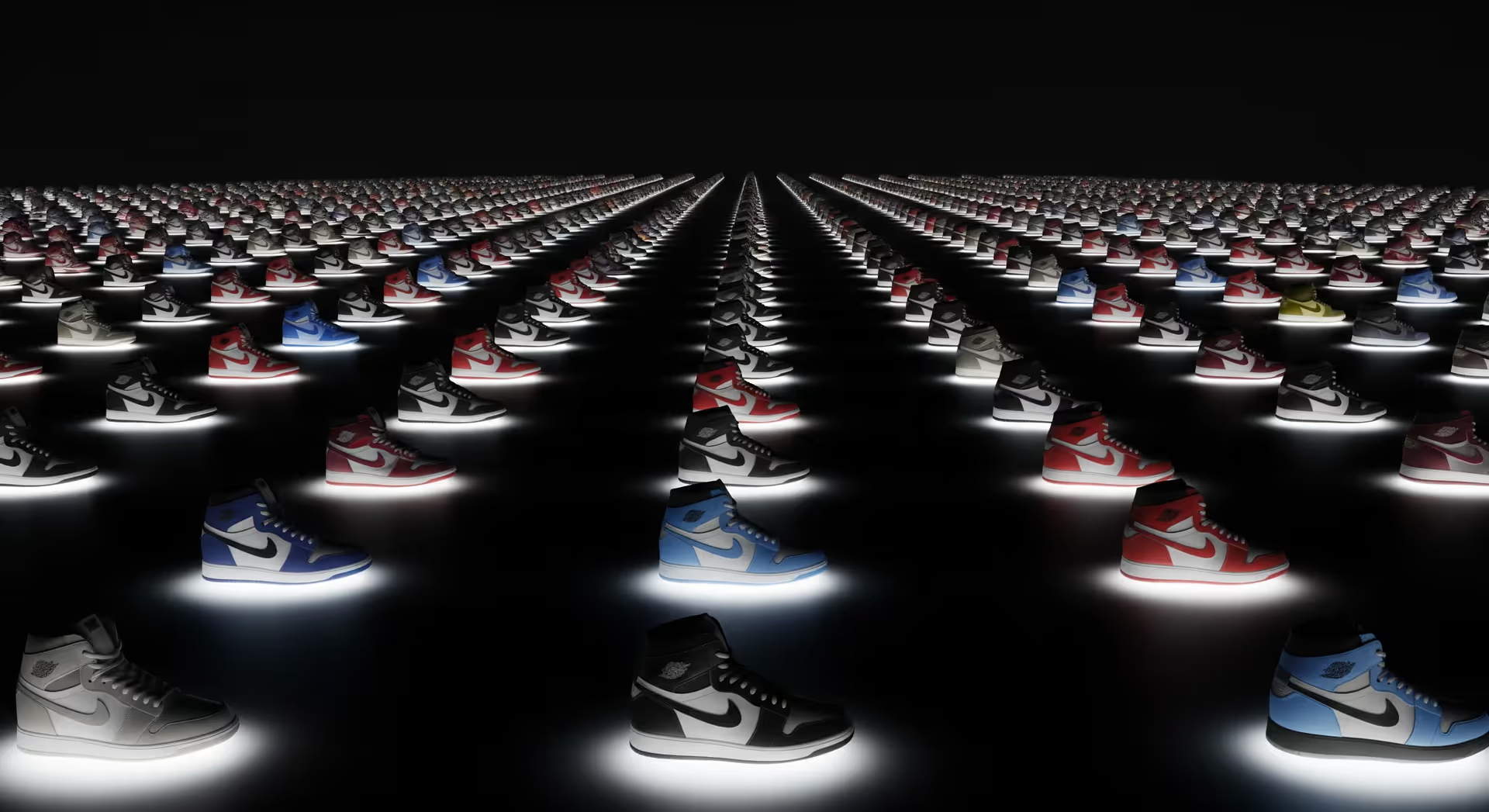
Most businesses spend weeks creating a single video campaign. Then they send the same generic video to 10,000 people and wonder why only 50 open it. Meanwhile, the top 1% are sending 10,000 completely unique videos in the time it takes you to export one file in Premiere Pro.
Here is the truth nobody talks about: personalization at scale is not a nice-to-have anymore. It is the only way to cut through the noise. But most businesses are still stuck in 2019, manually editing names into templates while AI-powered competitors are eating their lunch.
The Old Way vs. The AI-First Way
The Old Way: Your team records a base video. Then someone manually edits 50 versions with different names. It takes 3 days. The final cost per video is $12. You send them out and get a 4% click rate. You call it "personalized marketing."
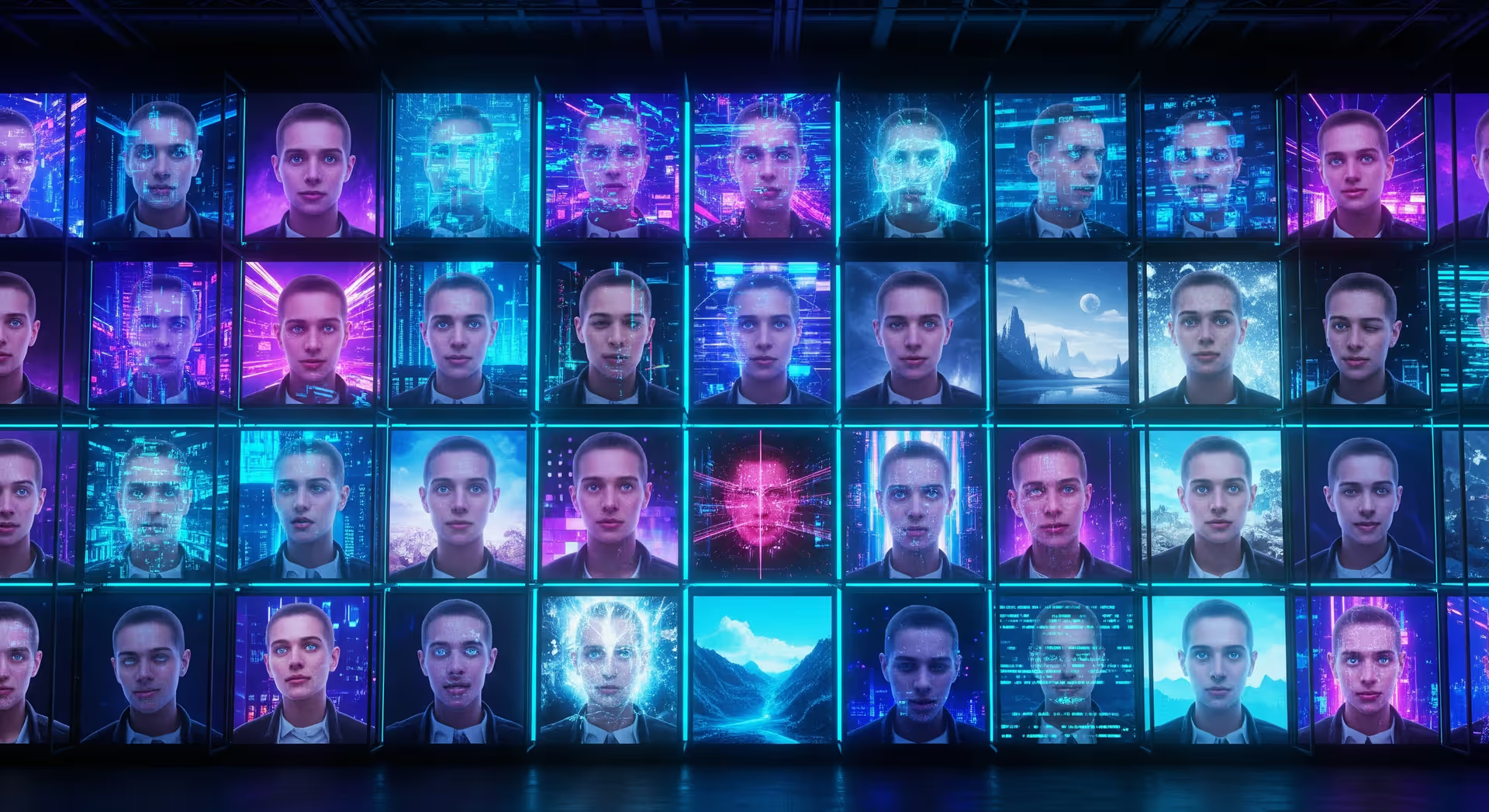
The AI-First Way: You record one video. You upload a CSV with 10,000 names, companies, and data points. AI generates 10,000 unique videos in 18 minutes. Each video has personalized audio, text overlays, and custom CTAs. Cost per video drops to $0.15. Click rates jump to 12-18%. Your team moves on to strategy instead of video editing.
The difference is not just speed. It is economics. When personalization becomes affordable at scale, you stop treating it like a luxury campaign and start using it everywhere: onboarding emails, abandoned cart recovery, sales follow-ups, customer success check-ins.
The Core Framework: How the Top 1% Do This
Here is the exact system that lets you send thousands of personalized videos without hiring a production team.
Phase 1: Build Your Base Asset
Record one high-quality video. This is your template. Speak naturally but leave space for dynamic elements. Use variables like "Hey {FirstName}" or "I noticed {CompanyName} recently {TriggerEvent}." Tools like BHuman or Vidyard let you record once and mark variable spots for personalization.
Phase 2: Connect Your Data Source
Pull your contact data into a spreadsheet or CRM. You need at minimum: first name, email, and one unique data point (company name, recent action, location). The magic happens when you combine behavioral data with demographic data. Someone who abandoned a cart gets a different video than someone who just signed up.
Phase 3: Automate the Generation
This is where Make.com or Zapier comes in. Set up a workflow that triggers when someone hits a specific action (form fill, cart abandonment, signup). The automation pulls their data, sends it to your video platform, generates a personalized video, and delivers it via email or SMS. All in under 60 seconds.
Phase 4: Deploy Across Channels
Do not limit yourself to email. Personalized videos work in LinkedIn DMs, sales cadences, post-purchase sequences, and even paid retargeting. The same base video can be repurposed across 6 different use cases by changing the data inputs and CTAs.
The Hard ROI: Why This Matters to Your Bottom Line
Let me give you the math that convinced my last client to go all-in on personalized video.
Generic video campaigns average 3-5% engagement. Personalized video campaigns average 12-18% engagement. That is a 3x-4x lift in every metric that matters: open rates, click rates, conversion rates. Research from Idomoo shows personalized videos are 3.5x more likely to make someone become or stay a customer.
Here is what that looks like in dollars. Say you are sending 5,000 videos per month for a product launch.
Old Way Math: 5,000 sends x 4% click rate = 200 clicks. Cost per video: $8 (outsourced). Total cost: $40,000. If 5% of clicks convert, you get 10 customers.
New Way Math: 5,000 sends x 15% click rate = 750 clicks. Cost per video: $0.20 (AI automation). Total cost: $1,000. If 5% of clicks convert, you get 37 customers.
You just 3x your customer acquisition while spending 97% less on production. Even if you account for tool costs (around $150-$300/month), the ROI is absurd. One client saw an 890% ROI in the first quarter after switching to personalized video at scale.
But the real ROI is time. If your team saves 20 hours per week not manually editing videos, that is 1,000 hours per year. At $75/hour (loaded cost for a mid-level marketer), you just saved $75,000 in labor costs.
The Tool Stack: What You Actually Need
You do not need a $50,000 enterprise contract to do this. Here is the exact stack I recommend for businesses getting started.
Video Personalization Platform: BHuman ($99/month for 1,000 videos), Vidyard (starts at $19/month), or Elai.io ($29/month). BHuman is best for true AI cloning of your face and voice. Vidyard integrates cleanly with HubSpot and Salesforce. Elai.io is the budget option if you want AI avatars instead of recording yourself.
Automation Layer: Make.com wins here for visual workflows and cost efficiency. Zapier charges per "task," which gets expensive fast when you are processing thousands of videos. Make.com gives you unlimited operations on higher tiers. If you are technical, n8n is the open-source option.
Data Source: Your CRM is ideal (HubSpot, Salesforce, Pipedrive). If you do not have a CRM, Google Sheets works fine for smaller volumes. Just connect it via Zapier or Make, and you are off to the races.
Delivery Method: For email, use your existing ESP (Mailchimp, ActiveCampaign, ConvertKit). For LinkedIn and social, tools like Lemlist or Instantly.ai let you embed personalized video links directly in outreach sequences.
The total cost for this stack runs $150-$400/month depending on volume. Compare that to hiring a video editor at $3,000-$5,000/month or outsourcing to an agency at $500-$1,000 per video. The math is not even close.
You Are Competing Against AI-First Companies Now
Here is what most marketers miss: while you debate whether personalized video is "worth it," your competitors are already sending 10,000 unique videos per week. They are building relationships at scale while you are still batch-and-blasting generic content.
The companies winning in 2025 treat video like email. They do not agonize over every frame. They build systems that let them personalize at scale, test fast, and iterate based on data. They use AI to handle the repetitive work so their teams can focus on strategy and creativity.
Stop treating video like this precious, handcrafted thing. Start treating it like what it is: a scalable channel for building human connections with your audience. The tools exist. The ROI is proven. The only question is whether you will adopt this before your competitors take your market share.
Do not just read this. Go build one automated personalized video workflow this week. Pick one use case (abandoned cart, sales follow-up, onboarding). Set up the automation. Send 100 videos. Watch the metrics. Then scale it.
The future of marketing is not more content. It is more relevant content delivered to the right person at the right time. Personalized video at scale is how you do that without burning out your team or your budget.
Related Topics
Related Articles